
Menu
The holiday season brings joy, celebration, and, unfortunately, a surge in fraudulent activity. As you prepare for Christmas shopping and gift-giving, scammers are working overtime to exploit the increased online transactions and general holiday chaos. From fake package delivery texts to social media posts advertising deeply discounted toys, criminals are using increasingly sophisticated methods to steal your money and personal information during what should be the most wonderful time of the year.
Your vulnerability increases during Christmas because you’re likely distracted, rushed, and making more purchases than usual. The combination of tight shopping deadlines, emotional gift-buying decisions, and the sheer volume of legitimate holiday communications creates the perfect environment for scammers to blend in. Understanding the tactics fraudsters use and recognizing warning signs can mean the difference between a memorable holiday season and a financial nightmare.
Manhattan District Attorney Alvin Bragg warns that fraudsters are now using AI to be more persuasive and target larger numbers of people simultaneously. This technological advancement makes scams harder to detect and more convincing than ever before. Taking a few simple precautions now can protect you from becoming another holiday fraud statistic.
Christmas creates ideal conditions for fraudsters due to increased consumer activity, emotional decision-making, and the sheer volume of transactions, which makes fraudulent activity harder to detect.
The holiday season brings a massive surge in online purchases as you shop for gifts and seasonal items. This volume creates opportunities for scammers to blend fraudulent transactions among legitimate ones.
Delivery scams have become particularly prevalent, with over 90% of Australians receiving scam texts or calls impersonating shipping and parcel delivery services. Fraudsters send fake delivery notifications via text or email, claiming issues with your package that require immediate action. These messages often include malicious links that lead to counterfeit websites, designed to harvest your personal and financial information.
The anticipation of expected deliveries makes you more likely to click without verifying authenticity. Scammers exploit platforms like Facebook Marketplace, posing as buyers and sending malicious QR codes through Messenger that redirect to fake courier service websites.
Christmas shopping involves emotional purchases driven by the desire to find perfect gifts for loved ones. This emotional state makes you more vulnerable to making quick decisions without proper scrutiny.
The time pressure of holiday deadlines amplifies this vulnerability. You may rush through checkout processes or respond immediately to “limited time” offers without verifying their legitimacy. Fraudsters deliberately create artificial urgency through messages claiming your account will be suspended, or a package will be returned, unless you act immediately.
Holiday shoppers face increased targeting as thieves and fraudsters intensify their operations during this season. Your focus on completing purchases quickly, rather than carefully reviewing each transaction, creates opportunities for scammers to succeed.
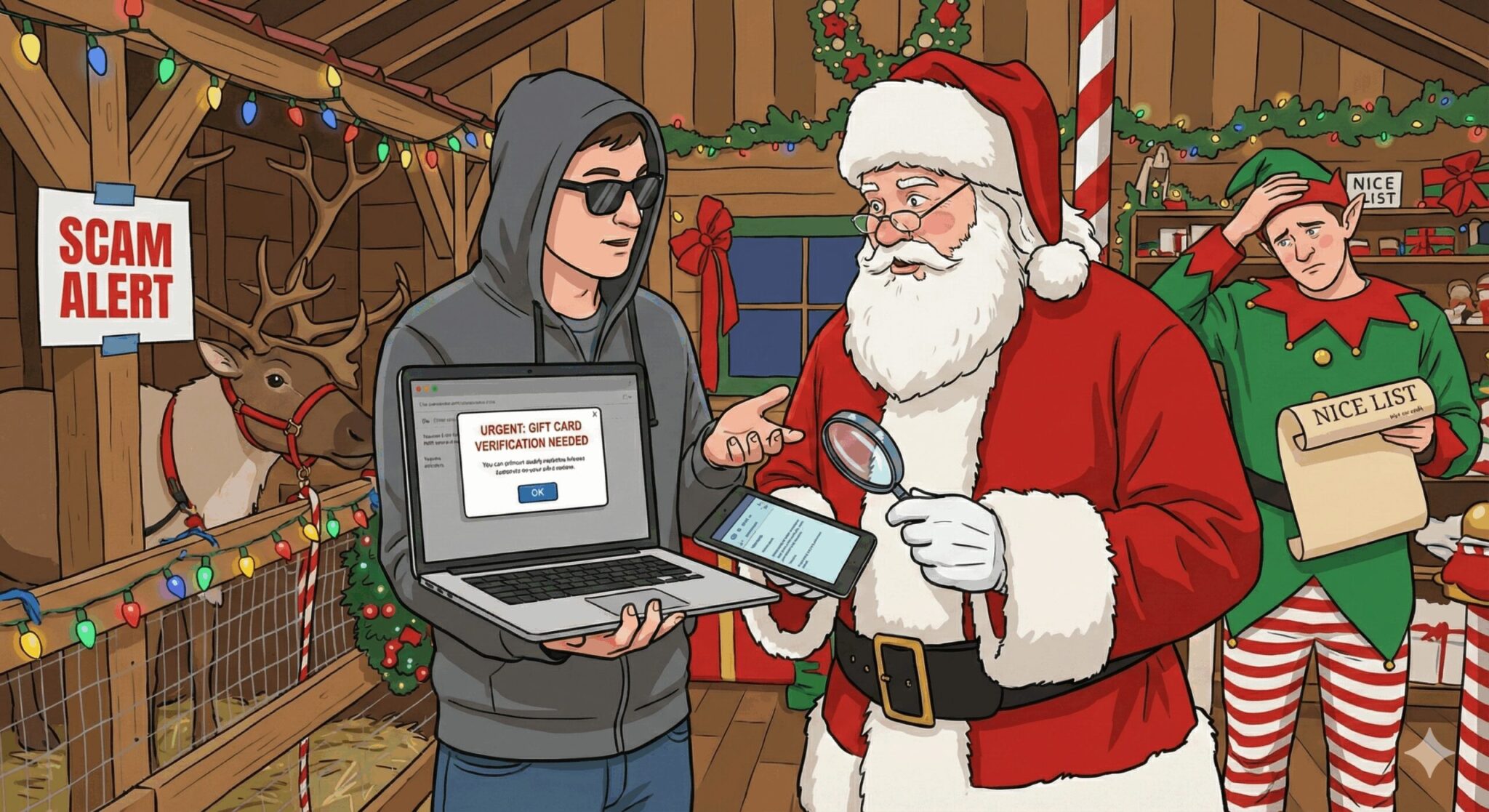
Scammers employ increasingly sophisticated methods tailored specifically for the Christmas season. They use advanced phishing operations that circumvent traditional security filters by sending messages through encrypted channels, such as iMessage and Rich Communication Services.
Job seekers are targeted with fake offers customized to specific industries, including seasonal retail positions that appear during holidays. Fraudsters also impersonate utility companies, targeting vulnerable groups with threats of service disconnection during the coldest months.
The tactics include:
These criminals adapt their strategies to match current news and shopping trends, making their approaches appear timely and credible.
Criminals exploit the busy shopping season by impersonating delivery services, creating fake online stores, and sending fraudulent messages designed to steal your personal information and money. These tactics intensify during Christmas when people expect multiple deliveries and make numerous online purchases.

Fraudsters send text messages or emails claiming to be from shipping companies like UPS, FedEx, or USPS. These messages often state that a delivery attempt failed or that you need to pay additional fees to receive your package.
The messages contain links that lead to fake websites designed to look like legitimate courier sites. When you click these links and enter your information, scammers capture your credit card details, passwords, and personal data.
Common warning signs include:
Always verify delivery notifications by visiting the shipping company’s official website or app directly, rather than clicking on links in messages. Check your order confirmation emails from retailers to confirm the expected delivery dates.
Amazon warns customers about holiday cyberattacks as criminals create fake advertisements on platforms like Facebook and Instagram. These ads promote products at unrealistically low prices to lure shoppers.
Scammers set up fraudulent online stores that appear professional, using stolen product images and fake customer reviews. After you place an order and provide payment information, you either receive counterfeit goods or nothing at all. Your credit card information may also be used for unauthorized purchases.
Research sellers before making purchases by checking for customer reviews on independent sites. Look for contact information, return policies, and business addresses. Be cautious of deals that seem too good to be true, especially from sellers with no established track record.
You receive messages that appear to come from Amazon, PayPal, or your bank claiming there’s an issue with your account. The Boston Police Department warns consumers to be cautious during the holiday shopping period.
These phishing attempts create a sense of urgency by suggesting that your account will be suspended or that unauthorized charges have been detected. The messages contain links to fake login pages that steal your credentials when you enter them.
Key characteristics of phishing attempts:
Contact companies directly using phone numbers or websites you find independently, not those provided in suspicious messages. Enable two-factor authentication on your accounts to add an extra security layer.
Scammers contact you claiming to be from tech support, government agencies, or utility companies, demanding payment via gift cards. They create pressure by threatening service disconnection, arrest, or other consequences if you don’t comply immediately.
Appalachian Power warns of increased scam activity as criminals target customer accounts during the holidays. Legitimate companies and government agencies never request payment through gift cards or wire transfers.
Other payment scams involve fake charity appeals that exploit your generosity during the holiday season. Criminals set up websites for non-existent organizations or impersonate real charities to collect donations they keep for themselves. Verify charities through watchdog sites before donating, and use credit cards rather than debit cards or gift cards for better fraud protection.
Modern scammers leverage cutting-edge technology to execute increasingly sophisticated attacks during the holiday season. Artificial intelligence and advanced phishing methods have transformed traditional fraud into highly targeted, automated operations.
Fraudsters now deploy AI tools to create convincing fake websites, generate personalized scam messages, and mimic legitimate businesses at scale. These automated systems can analyze your social media profiles to craft messages that reference your specific interests, location, and shopping habits.
Voice cloning technology enables scammers to replicate the voices of family members or company executives in seconds. They use these synthetic voices to request urgent money transfers or sensitive information during phone calls.
Common AI-powered fraud techniques include:
The science behind machine learning allows these systems to improve with each attempt. Your responses to suspicious messages actually train the algorithms to become more convincing for future targets.
Holiday-themed phishing attacks now bypass traditional email filters through advanced obfuscation techniques. Scammers embed malicious links in shipping notifications, order confirmations, and charity appeals that appear identical to legitimate communications.
QR code phishing has emerged as a particularly effective method during the shopping season. Fraudsters place fake QR codes on parking meters, restaurant tables, and product packaging that redirect you to credential-harvesting sites designed to steal your payment information.
These attacks exploit urgency by claiming your package is delayed or that your account will be suspended. The technology behind these scams includes spoofed sender addresses, cloned brand logos, and SSL certificates that make fraudulent websites appear secure in your browser.
Scammers concentrate their efforts on specific demographics and online environments where defences are weakest. Senior citizens, families, gaming communities, and young people face distinct threats that exploit their unique vulnerabilities and digital behaviours.
Senior citizens remain prime targets for holiday scams due to lower digital literacy and higher trust in unsolicited communications. You may notice scammers impersonating grandchildren in distress, requesting urgent money transfers for fabricated emergencies. These “grandparent scams” intensify during the Christmas season, when family concerns are at their peak.
Fraudsters also exploit seniors through fake charity appeals and phishing schemes targeting Social Security. The financial impact is severe, with victims losing an average of $1,600 per incident, according to recent reports. Your elderly family members may struggle to identify spoofed phone numbers or fraudulent emails that appear legitimate.
Family-oriented scams target parents through fake toy delivery notifications and schemes that exploit children’s wish lists. Scammers create a sense of urgency around popular gift items, directing you to counterfeit websites that steal payment information without delivering the products.
Gaming platforms have become major fraud hotspots during the holiday season. Scammers target you through fake in-game currency offers, phishing links disguised as exclusive Christmas content, and account takeover attempts. Gaming communities see increased activity in December, creating more opportunities for fraudsters to operate.
You face particular risks when purchasing digital gift cards or game codes from third-party sellers. These transactions often involve stolen payment methods or non-existent products. Steam, Xbox, and PlayStation gift cards are frequently used in payment scams where fraudsters demand them instead of traditional money transfers.
Voice chat and messaging features within games allow scammers direct access to younger players. Your children may encounter adults posing as peers, building trust before requesting personal information or account credentials.
Young people increasingly participate in cybercrime, both as victims and perpetrators. You should know that teenagers are recruited through gaming channels and social media to act as “money mules,” transferring stolen funds for small payments.
Social media challenges and fake giveaways lure youth users into sharing personal data in exchange for promised rewards. Your children’s information becomes valuable to scammers building identity theft profiles or accessing family accounts.
Educational gaps in cybersecurity leave youths vulnerable to manipulation. Many lack awareness that forwarding phishing links or sharing account access constitutes illegal activity with serious consequences.
Scammers exploit the holiday rush by creating fake delivery notices and fraudulent shopping sites designed to steal your personal information and money. Understanding how to spot these threats and shop safely online can help protect your home and finances during the Christmas season.
You need to slow down when messages create a sense of urgency. Scammers thrive on pressure tactics that push you to act immediately without thinking. If someone claims your package is stuck or your account will be closed unless you click a link right now, that’s a significant warning sign.
Be vigilant for impersonation attempts from fraudsters posing as reputable companies. A delivery scam often arrives as a text message claiming to be from USPS, UPS, or FedEx, stating that a package has been missed at your home. These messages contain links that install malware or demand payment for redelivery.
Key red flags include:
Don’t trust the caller ID alone, as scammers can spoof legitimate phone numbers to appear authentic.
You should always type website URLs directly into your browser rather than clicking links in emails or social media ads. Shopping directly from official websites prevents you from landing on counterfeit sites that look identical to legitimate retailers.
Enable two-factor authentication on all your accounts before Christmas shopping begins. This additional security layer prevents fraudsters from accessing your information, even if they obtain your password. Set up account alerts through your banking app to receive immediate notifications of suspicious transactions.
Use credit or debit cards with purchase protection rather than wire transfers or gift cards. Your card issuer can often reverse fraudulent charges and provide additional security during disputes.
Essential shopping security steps:
If a deal appears too good to be true, research the seller before providing payment information.
Law enforcement agencies across multiple countries have issued specific warnings about Christmas scams in 2025, with Australian authorities reporting a 35% increase in holiday fraud attempts. Certain scam types show distinct geographical patterns, while others appear simultaneously worldwide.
The Australian Competition and Consumer Commission has identified fake delivery notifications as the most prevalent scam this Christmas season. You should be aware that scammers are sending text messages claiming to be from Australia Post, requesting payment for parcel redelivery or customs fees.
Australian consumers lost $2.7 million to fake online shopping sites in the first week of December 2025 alone. These fraudulent websites often advertise popular sports merchandise, including cricket equipment and AFL team jerseys, at prices significantly lower than the retail value.
Scamwatch has received over 8,000 reports of Christmas-related fraud since November 2025. The majority involve fake charity appeals, with criminals impersonating legitimate organizations, collecting donations for bushfire relief and children’s hospitals. You can verify charities through the Australian Charities and Not-for-profits Commission register before making a donation.
The FBI’s Internet Crime Complaint Center reported a 42% surge in holiday scam complaints compared to December 2024. Your personal information remains the primary target, with criminals using fake gift card promotions to harvest credit card details.
UK police forces have warned about WhatsApp message scams in which fraudsters impersonate family members to claim emergency situations. These messages typically request urgent money transfers for supposed accidents or legal troubles.
Canadian authorities have identified a new trend involving the sale of counterfeit tickets for sporting events and concerts scheduled for early 2026. You should only purchase tickets from official vendors or verified resale platforms with buyer protection guarantees.
Cryptocurrency investment scams have emerged as a consistent threat across North America, Europe, and Asia this holiday season. Fraudsters promise guaranteed returns on Bitcoin investments before year-end for tax purposes.
Social media platforms show coordinated scam campaigns targeting users in multiple countries simultaneously. The same fake advertisements for luxury goods appear on Facebook and Instagram with minor variations in currency and shipping information.
Common Global Tactics:
Romance scams increase by 28% during December across all regions. You may encounter scammers on dating apps requesting money for travel expenses to meet you during the holidays.
Contents